

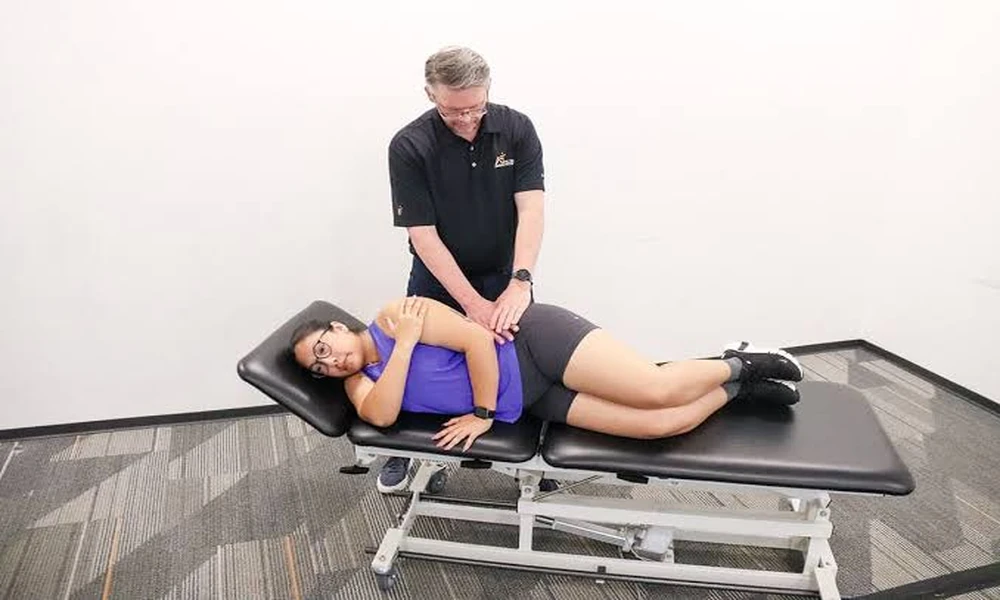
Sciatica is commonly assumed to be a diagnosis, and treatment is imagined as someone pushing a displaced part back where it belongs. Neither idea is accurate. Sciatica describes a symptom, pain travelling along the course of the sciatic nerve, and it has several possible causes. A visit to a sciatica chiropractor should therefore begin with working out which of those causes is likely, and whether manual care is suitable at all, before anything is done to the spine.
What Sciatica Actually Describes
The sciatic nerve is formed by nerve roots leaving the lower lumbar spine and sacrum, and it runs through the buttock and down the back of the leg. When one of those roots is irritated or compressed, pain can be felt anywhere along that route, often with tingling, numbness or weakness. Typical leg pain is sharper than the accompanying backache and may extend below the knee to the foot. Pain confined to the buttock or thigh frequently has a different origin.
Common Underlying Causes
A lumbar disc herniation is the most frequent cause in adults under fifty, where disc material presses on or inflames a nerve root. In older adults, narrowing of the spinal canal or the exit channels, known as stenosis, becomes more common. Less often, a vertebra slipping forward or tightness in the deep buttock muscles is implicated. Referred pain from spinal joints or the sacroiliac joint can mimic sciatica without involving the nerve, which is why examination matters.
The First Consultation
Expect a detailed history: when the pain began, where it travels, what aggravates it, whether coughing or sitting makes it worse and how sleep is affected. The examination usually includes observing posture and gait, testing spinal movement, the straight leg raise, reflexes at the knee and ankle, muscle strength in the foot and toes, and skin sensation. These tests help identify which nerve root is involved and establish a baseline against which later progress can be judged.
How Work Habits Enter the Picture
The practitioner will ask about occupation because prolonged sitting, repeated bending and heavy lifting all influence recovery. A driver or desk-based worker may need to change position far more often than they currently do. Some employers address this through company wellness programs that fund ergonomic assessments and allow graded return to normal duties. Where no such support exists, simple measures such as a lumbar support, a raised screen and scheduled standing breaks are usually recommended early in care.
When Imaging Is Considered
Most people with sciatica do not need a scan at the outset. Disc bulges are common on MRI in people with no symptoms at all, so images can mislead when taken too early. Imaging becomes appropriate when there is significant or progressing weakness, when symptoms fail to improve after several weeks of conservative care, when a serious cause is suspected or when surgery or injection is being contemplated. A responsible practitioner refers for imaging on clinical grounds and not as routine.
What Treatment Sessions Involve
Care is usually a combination of approaches. These may include spinal mobilisation or manipulation where suitable, flexion-distraction or other traction-based techniques on a specialised table, soft tissue work to the hip and lower back, and nerve gliding exercises. Advice to stay gently active is central, since prolonged bed rest tends to slow recovery. Evidence for manipulation in sciatica is moderate at best and varies between studies, so techniques should be adapted to how each person responds.
A Realistic Timeline
Many episodes of sciatica improve substantially within six to twelve weeks, whatever conservative approach is used, though a minority persist longer. Early sessions are often spaced closely, then reduced as symptoms settle. A useful sign of progress is centralisation, where leg pain retreats towards the spine even if the back itself feels sore for a time. A practitioner should set a review point, commonly after four to six visits, and change course or refer onward if little has shifted.
Symptoms That Need Urgent Attention
Certain features must never wait for a routine appointment. Loss of bladder or bowel control, difficulty passing urine, numbness around the genitals or inner thighs, or sudden weakness in both legs may indicate cauda equina syndrome and require emergency hospital assessment. Progressive foot drop, severe unrelenting night pain, unexplained weight loss, fever or a history of cancer also call for prompt medical review. Manual treatment is not appropriate until these possibilities have been excluded.
Exercise and Soft Tissue Work
As pain eases, the emphasis moves towards rehabilitation. A typical programme builds hip and trunk strength, restores comfortable bending and gradually reintroduces lifting. Tight or tender tissue around the hip and hamstring is sometimes addressed with hands-on release or with iastm, which stands for instrument-assisted soft tissue mobilisation and is written IASTM in clinical notes. Research on this technique for sciatica specifically is sparse, so it is best viewed as a supplementary measure within an exercise-led plan.
Deciding How to Proceed
Conservative care is a reasonable first choice for sciatica without red flags, provided there is a clear plan and a defined review date. Before starting, ask what the working diagnosis is, which nerve root appears involved, how many sessions the initial trial covers and what would trigger referral to a GP or spinal specialist. Keep a brief record of leg pain and walking tolerance. If weakness develops or symptoms worsen despite treatment, seek medical advice without delay.
