

You remind them to brush, they do it for ten seconds, then they run off with toothpaste still on their chin. You buy the fun toothbrush, the flavored toothpaste, the reward chart, and somehow dental care still turns into a daily tug of war. If that sounds familiar, you are not doing anything wrong. Teaching children to care for their teeth takes repetition, patience, and a plan that fits real family life, and knowing where to turn for Honolulu emergency dental care can also bring extra peace of mind.
The good news is that early routines matter more than perfection. Kids do not need flawless habits overnight. They need simple, steady cues that make brushing, flossing, and regular checkups feel normal. That is how helping kids develop positive dental habits early turns from a stressful goal into a routine your child can carry into adulthood.
Early oral health habits shape more than a clean smile
Children learn by watching, copying, and repeating. If dental care feels rushed, optional, or tied only to pain, kids absorb that message fast. If it feels like part of the day, like putting on pajamas or washing hands, it becomes less of a fight.
This matters because tooth decay can start earlier than many parents expect. According to the National Institute of Dental and Craniofacial Research explanation of the tooth decay process, plaque bacteria feed on sugars and produce acids that weaken enamel over time. A child may seem fine until a small issue turns into sensitivity, cavities, missed school, or a painful visit that makes future care harder.
That is why healthy dental routines for children work best when they start before problems show up. The goal is not fear. The goal is familiarity.
Small daily struggles can turn into bigger dental problems
A lot of families run into the same obstacles. Bedtime is already packed. Mornings are rushed. Some kids hate the taste of toothpaste, some gag when brushing the back teeth, and some clamp their mouths shut the second floss appears. Then there is the snack issue. Crackers, juice, sticky fruit snacks, and sipping milk or juice all day can keep teeth under constant sugar exposure, even when the foods seem harmless.
When habits stay inconsistent, the pattern builds on itself. A child who brushes poorly may develop plaque along the gumline. A child with early decay may start avoiding cold foods or chewing on one side. A child who only sees a dentist when something hurts may start to link dental visits with stress. That cycle is hard to break once it settles in.
Parents often assume they need stricter rules when what usually works better is clearer structure. Children respond to routine, modeling, and small wins they can repeat.
Six practical tips for building positive dental habits in kids
1. Tie brushing to routines your child already follows. Brush after breakfast and before bed at the same time every day. Predictable timing cuts down on arguments because it stops feeling negotiable.
2. Make the process visible. Brush your teeth next to your child. Kids copy what they see more than what they are told. This is one of the simplest forms of good oral hygiene for kids.
3. Keep the goal small and clear. Two minutes, twice a day. Use a timer, a song, or a toothbrush with a built in timer. Younger children do better with one simple target than a long lecture.
4. Choose snacks with teeth in mind. Water, cheese, yogurt, crunchy vegetables, and whole fruit are easier on teeth than sticky sweets or constant sipping of sweet drinks. The CDC’s oral health tips for children offer practical guidance on brushing, fluoride, and smart drink choices.
5. Start flossing when teeth touch. Many parents wait too long because flossing seems advanced. If two teeth are touching, food and plaque can get trapped there. The NIDCR oral hygiene guidance explains the basics clearly and reinforces why brushing alone is not always enough.
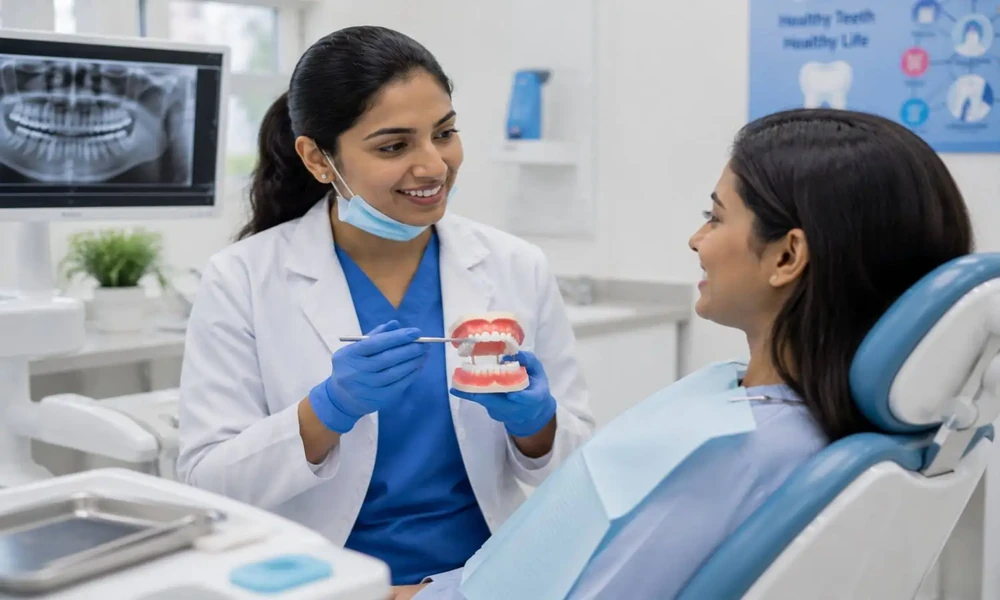
6. Keep dental visits routine, not emergency based. A family dentist can track development, catch early problems, and help your child get used to the setting before there is pain involved. That alone can lower fear and make future appointments easier.
Simple habits beat occasional effort
Parents often wonder whether a quick brush is better than a long battle, or whether skipping floss for a while really matters. In real life, consistency wins. A child who brushes well enough every day usually does better than a child who has one perfect session and then misses the next three.
| Habit | When It Is Consistent | When It Is Inconsistent |
|---|---|---|
| Brushing twice daily | Less plaque buildup, cleaner teeth, routine feels normal | More plaque, more resistance, brushing feels optional |
| Flossing once teeth touch | Better cleaning between teeth, lower cavity risk in tight spaces | Food and plaque stay trapped where brushes cannot reach |
| Choosing water over sugary drinks | Less sugar exposure during the day, lower acid attacks on enamel | Teeth face repeated sugar and acid exposure |
| Regular family dentist visits | Problems are found early, visits feel familiar | Issues may go unnoticed until pain or visible damage appears |
Three steps you can take today to improve kids dental care
Set a two minute brushing routine tonight. Pick a fixed time, stand with your child, and brush together. If your child is young, finish the brushing yourself to make sure all tooth surfaces get cleaned.
Change one snack or drink habit this week. Replace one daily sugary drink with water, or swap a sticky snack for something less likely to cling to teeth. Small changes done every day often matter more than big changes that do not last.
Schedule preventive dental care before there is a problem. A routine visit with a family dentist gives you guidance based on your child’s age, risk, and habits. It also helps your child see dental care as a normal part of staying healthy, not a response to pain.
Positive dental habits early can make life easier for years
You do not need to fix every brushing struggle at once. Children learn in layers, and steady routines have a way of becoming part of the day without so much friction. Positive dental habits early protect teeth, lower stress, and give your child skills that last well beyond childhood.
If your child needs support with brushing habits, flossing, or preventive care, schedule a visit with a family dentist and get a plan that fits your daily routine.
