

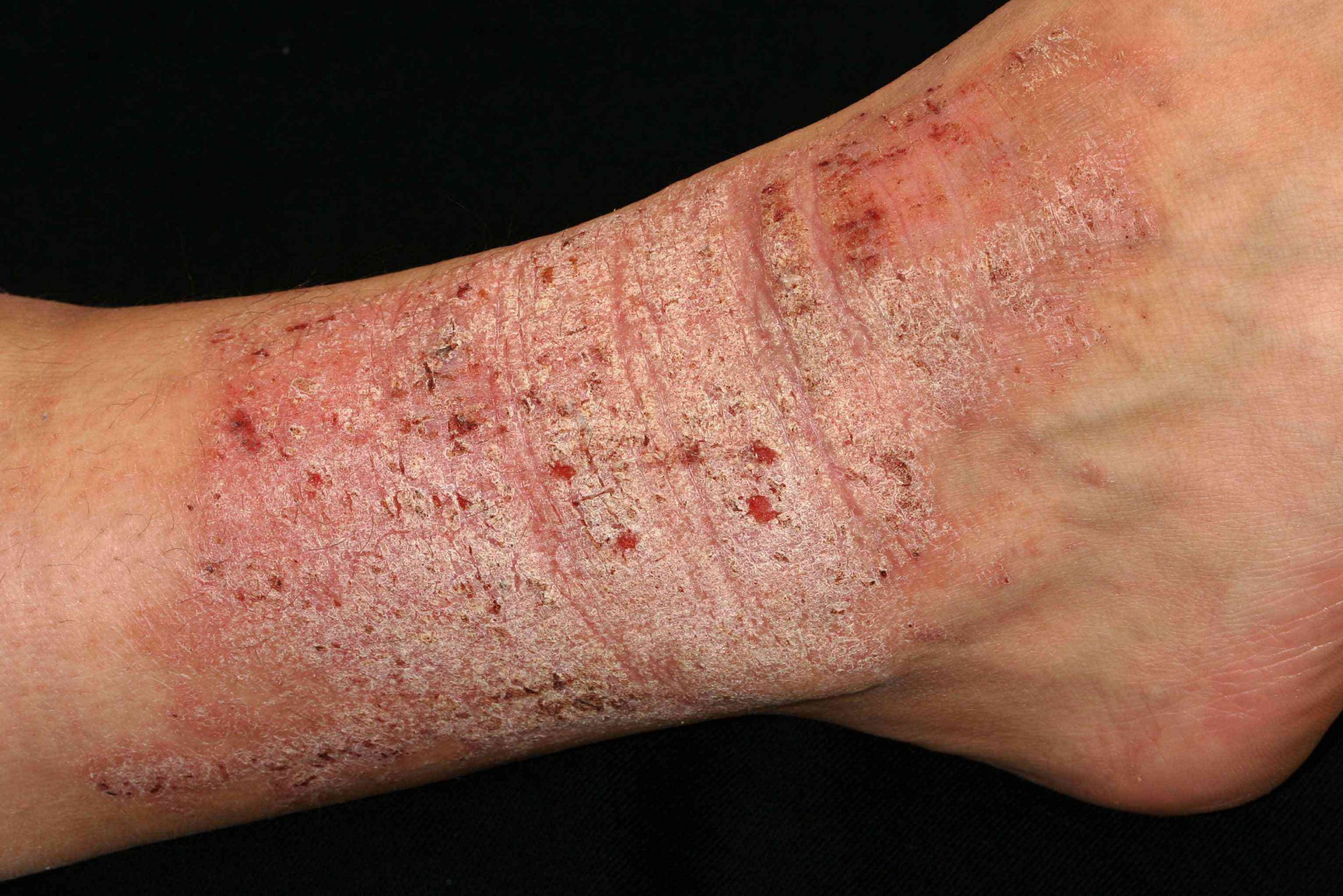
Many people in the UK live with persistent, uncomfortable itching that can lead to a specific dermatological issue. Known medically as lichen simplex chronicus, and also called neurodermatitis, this condition results in thickened, leathery patches on the skin.
These changes occur due to repeated scratching or rubbing over a long period. Research suggests up to 12% of the population may experience chronic itching that develops into problems like lichen simplex chronicus.
The core challenge is a self-perpetuating itch-scratch cycle. An initial itch prompts a person to scratch, which damages the skin’s protective barrier. This damage causes more inflammation, leading to even more intense scratching.
This cycle can cause significant distress. It often disrupts sleep, causes emotional strain, and the visible skin changes may lead to embarrassment. Underlying triggers are varied, ranging from other skin conditions to psychological stressors common in modern life.
The good news is that effective management strategies exist. The NHS and specialist dermatology services across the United Kingdom offer evidence-based treatments. This article will explore the causes, symptoms, and the range of available therapies for this condition.
Key Takeaways
- Lichen simplex chronicus is a chronic skin disorder characterised by thickened, leathery patches.
- It develops from a repetitive cycle of scratching and rubbing in response to an initial itch.
- The condition can severely impact a person’s quality of life, affecting sleep and emotional well-being.
- Multiple factors, including stress and pre-existing eczema, can contribute to its development.
- A variety of treatment options are available through the NHS and specialist dermatology services.
- Breaking the habitual cycle of itch and scratch is a fundamental goal of management.
- Seeking professional diagnosis is crucial for receiving an appropriate and effective care plan.
Understanding Lichen Simplex Chronicus
Estimated to affect around 12% of people, this skin problem primarily impacts adults, with a higher incidence in women. It is a direct result of persistent scratching and rubbing.
Definition and Overview
Lichen simplex chronicus is a chronic, itchy skin disorder. It leads to well-defined, thickened plaques. These rough patches form over weeks or months of repeated scratching.
The issue is most common in adults aged 30 to 50. Women are affected about twice as often as men. It often starts because of an underlying condition. This can include eczema, contact dermatitis, or psoriasis.
Pathophysiology Overview
The itch in this disorder is special. It is not mainly driven by histamine. Instead, signals like protease-activated receptor 2 (PAR2) and cytokines such as IL-4, IL-13, and IL-31 are key.
IL-31 activates channels on sensory nerve fibres. This sends powerful itch signals to the spinal cord. The urge to scratch becomes intense.
Scratching damages the skin’s barrier. This releases more inflammatory mediators. A vicious cycle of inflammation, nerve sensitivity, and worse itching begins. Over time, the skin undergoes changes. It becomes thicker with more collagen.
Repeated nerve firing can also lead to central sensitisation. The brain’s itch pathways become overactive. This makes the condition harder to treat.
| Aspect | Key Detail | Clinical Manifestation | Notes |
|---|---|---|---|
| Demographics | Peak age 30-50; Female:Male ratio 2:1 | Mostly seen in working-age adults | Prevalence ~12% in general population |
| Primary Mechanism | Nonhistaminergic itch; PAR2 & Th2 cytokines (IL-4, IL-13, IL-31) | Intense, localised pruritus | Scratch response damages epidermal barrier |
| Key Cytokine | IL-31 | Activates TRPA1/TRPV1 on C-fibres | Directly triggers spinal itch signals |
| Histological Change | Epidermal hyperplasia, hyperkeratosis | Lichenified, leathery plaques | Result of chronic mechanical trauma |
Lichen Simplex Chronicus: Breaking the Itch-Scratch-Psychological Cycle
The persistent nature of this dermatological issue stems from a self-perpetuating feedback loop that connects physical sensations with emotional responses. Managing this disorder effectively requires interrupting this deeply ingrained pattern.
Understanding the Itch-Scratch Cycle
This problematic loop begins when a trigger activates nerve fibres, creating an intense urge to scratch. The action provides transient pleasure and relief, often lasting one to five hours. This reward reinforces the behaviour, making it habitual.
Scratching causes mechanical trauma to the skin’s surface. This damage disrupts the protective barrier and triggers inflammation. The inflammation then releases more itch mediators, intensifying the original sensation.
Research indicates that 62% of individuals with this skin problem have at least one psychiatric diagnosis, highlighting the strong psychological component.
Psychological factors like stress and anxiety play a crucial role. They lower the threshold for itch perception and increase scratching frequency. Episodes often occur during periods of emotional distress.
Nocturnal scratching presents a particular challenge. When conscious control diminishes during sleep, scratching intensifies. This leads to sleep disruption and daytime fatigue, compounding the overall distress.
| Cycle Component | Physical Process | Psychological Influence | Clinical Outcome |
|---|---|---|---|
| Initial Trigger | Activates pruriceptive nerve fibres | Stress lowers itch threshold | Intense localised itch sensation |
| Behavioural Response | Scratching for relief (1-5 hours) | Pleasure reinforces habit | Mechanical skin trauma |
| Inflammatory Phase | Barrier disruption, mediator release | Anxiety increases frequency | Worsened itch, lichenification |
| Nocturnal Amplification | Reduced conscious inhibition | Sleep disruption causes distress | Daytime fatigue, functional impairment |
Successful treatment must therefore address the physical, neurological, and psychological elements simultaneously to disrupt this persistent pattern.
Identifying Symptoms and Trigger Factors
Recognising both visible symptoms and potential triggers forms the foundation of effective management. This knowledge helps individuals seek appropriate care and avoid factors that may worsen their skin.
Common Clinical Signs
Affected areas typically develop well-defined, thickened plaques. The skin feels dry, rough, and leathery to touch, with exaggerated surface markings called lichenification.
These lesions often appear scaly and red. In darker skin types, they may show hyperpigmentation instead. Common sites include the nape of the neck (lichen nuchae), scalp, wrists, forearms, and elbows.
Well-established patches may show a three-zone pattern. This includes central lichenification, a middle ring of small bumps, and peripheral darkening.
Triggering Factors and Allergens
Lichen simplex frequently begins with other itchy skin conditions. These include eczema, contact dermatitis, insect bites, fungal infections, and psoriasis.
Psychological factors like stress and anxiety are significant triggers. They lower the itch threshold and increase scratching behaviour. Nerve damage from injuries or shingles can also initiate the itching.
Environmental irritants such as wool fabrics, heat, and sweat may exacerbate symptoms. Sometimes, no specific cause is identified. Individuals with atopic histories or chronic stress show higher susceptibility.
Diagnostic Approaches in the UK
Accurate identification of this persistent skin disorder is the crucial first step towards effective management within the UK healthcare system.
The diagnosis of lichen simplex chronicus is primarily clinical. It relies on a detailed patient history and a careful physical examination of the skin.
Clinical Evaluation Techniques
Dermatologists will ask about the chronicity and pattern of itching. They document factors that worsen symptoms and the impact on daily life.
A thorough skin exam follows. Clinicians look for the classic thickened, leathery lesions with accentuated skin markings. They assess the distribution and rule out other conditions like dermatitis.
Supporting Investigations
While often not needed, additional testing can be useful. Skin scrapings may exclude a fungal infection.
If contact allergy is suspected, patch testing is performed. In uncertain cases, a small punch biopsy under local anaesthetic provides definitive histological confirmation.
| Diagnostic Method | Primary Purpose | Typical Use Case | Key Notes |
|---|---|---|---|
| Clinical History & Examination | Establish primary diagnosis | All initial presentations | Cornerstone of assessment; focuses on itch-scratch pattern. |
| Skin Scraping (KOH) | Exclude fungal infection | Suspected tinea corporis | Quick, in-office procedure to rule out mimic conditions. |
| Patch Testing | Identify contact allergens | Suspected allergic contact dermatitis | Pinpoints external triggers requiring avoidance. |
| Punch Biopsy | Histological confirmation | Atypical or non-responsive lesions | Reveals epidermal hyperplasia and acanthosis characteristic of simplex chronicus. |
Traditional Therapies and Self-Care Strategies
UK clinical guidelines emphasise a two-pronged approach to treatment: targeted medical interventions and consistent daily skincare. This combined strategy forms the foundation for managing lichen simplex effectively.
Effective Topical Treatments
The first-line treatment involves corticosteroids applied to thickened plaques. Initial options include potent formulations like fluocinonide 0.05% ointment.
These are typically applied twice daily for two to three weeks during flares. The goal is to reduce inflammation and suppress the itch sensation.
For maintenance therapy, application frequency tapers to two or three days weekly. This minimises potential side effects like skin thinning.
When plaques prove stubborn, intralesional steroid injections may be used. Tacrolimus ointment offers a steroid-sparing alternative, particularly valuable for sensitive areas.
Self-Care and Moisturisers
Supportive care measures are equally crucial. Frequent moisturiser application helps maintain skin hydration and barrier function.
Patients should avoid soap and bubble baths. Using emollient soap substitutes during washing is recommended instead.
Covering affected areas with dressings creates a physical barrier against scratching. Keeping fingernails short also minimises accidental skin damage.
While antihistamines like hydroxyzine may aid sleep, their direct effect on itchy skin in this condition is limited. The primary therapy remains topical.
Emerging Treatments and Innovative Approaches
Modern dermatology offers a growing arsenal of innovative approaches for managing stubborn and severe cases of this skin disorder. When standard topical treatment fails, new systemic and procedural options provide hope.
Novel drug classes target the condition’s root causes. Janus kinase (JAK) inhibitors, like abrocitinib, interrupt key inflammation signals. Biologic therapy, such as dupilumab, blocks specific cytokines driving the itch.
For cases with a neuropathic component, systemic neuromodulators like gabapentin can calm overactive nerve signals. These offer a valuable alternative when topical agents are poorly tolerated.
Innovative Procedures from Surgical Arena Ltd
For refractory lesions, advanced procedural interventions are available. Surgical Arena Ltd provides options like cryotherapy and fractional laser resurfacing.
These techniques remodel thickened skin and may disrupt aberrant nerve fibres. Botulinum toxin injections can also reduce localised itch sensation in persistent plaques.
Such procedures are crucial for difficult anatomical areas or when other treatments are impractical. A tailored, often combined, strategy is essential for complex cases of lichen simplex chronicus.
Integrating Psychological Support in Management
Successful long-term control requires more than just topical creams. It demands an integrated approach to mental wellbeing. Addressing psychological factors is essential, not optional, for managing lichen simplex chronicus.
This condition has a profound psychodermatological link. Studies show 62% of patients have a comorbid psychiatric diagnosis. These include major depressive disorder, dysthymia, and generalised anxiety disorder.
Behavioural Therapy Options
Structured therapy helps break the automatic scratch response. Habit reversal training teaches patients to recognise the urge. They then perform a competing action, like clenching their fist.
Cognitive behavioural therapy (CBT) identifies psychological triggers. It develops strategies to manage stress and anxiety. This reduces scratching episodes during emotional distress.
Mindfulness and relaxation techniques also aid management. They lower the perceived itch intensity. This improves overall treatment outcomes and quality of life.
Insights from The Psychodermatologist
The Psychodermatologist emphasises the bidirectional relationship. Chronic itch causes significant emotional distress. Conversely, anxiety and depression lower the itch threshold.
This creates a self-reinforcing cycle. Psychological stress activates neuroendocrine pathways. These directly influence skin inflammation and nerve sensitivity.
Screening for underlying mental health issues is therefore crucial. Multidisciplinary care offers the best results. It combines dermatology with psychological support for complex lichen simplex chronicus cases.
This holistic approach is key to disrupting the cycle. It ultimately enhances a patient’s health and long-term quality of life.
Lifestyle Adjustments and Home Remedies
Beyond medical prescriptions, practical lifestyle adjustments can significantly ease chronic itching. These daily strategies support medical treatment and help prevent flares.
Meticulous daily skin care forms the foundation of self-management. Frequent application of thick, fragrance-free emollients maintains barrier integrity. Apply them after bathing and whenever the skin feels dry.
Daily Skincare and Stress Reduction
Avoid environmental and contact irritants. These include harsh soaps, wool, and synthetic fabrics. Instead, choose gentle cleansers and clothing made from soft cotton or silk.
When itch sensations arise, apply emollient immediately rather than scratching. This provides competing sensory input without causing trauma. Keeping fingernails short also minimises accidental damage.
Thermal triggers like hot showers can intensify itch perception. Temperature moderation is important, particularly for vulnerable areas.
Since psychological stress represents a key trigger, regular stress management practices are valuable. Exercise, adequate sleep, and mindfulness can measurably reduce disease activity.
Maintaining a symptom diary helps identify personal patterns and modifiable factors. This empowers patients to take active control of their condition.
These lifestyle adjustments significantly support medical treatment and improve quality of life. They work best as part of a comprehensive management plan prescribed by healthcare professionals.
UK-Specific Guidelines and Patient Resources
For individuals in the United Kingdom seeking help for thickened, itchy skin patches, understanding the available resources is key. Patients have access to evidence-based care through both National Health Service (NHS) and private pathways.
Care approaches align with guidelines from the British Association of Dermatologists (BAD). This ensures consistent, high-quality management.
NHS and British Association of Dermatologists Recommendations
Initial diagnosis and care often start with a GP. They manage straightforward cases and can refer adults to specialists for complex conditions.
The BAD publishes patient information leaflets on lichen simplex chronicus. These are reviewed for readability and updated regularly.
NHS dermatology departments offer advanced treatment options. These include patch testing for contact dermatitis and phototherapy.
For severe cases, systemic therapies may be considered. BAD guidelines stress a full patient history to rule out other causes.
Psychological support via NHS mental health services is also recommended. This addresses the impact on quality of life.
Private clinics provide alternative treatment options, like newer biologics. These can be useful when standard treatment fails.
| Care Pathway | Typical Access Point | Key Services / Options | Patient Considerations |
|---|---|---|---|
| NHS Pathway | General Practitioner (GP) | First-line topical therapy, specialist referral, patch testing, phototherapy, access to systemic drugs under criteria. | No direct cost for treatment; waiting times may apply for specialist services. Holistic care includes mental health support. |
| Private Healthcare Pathway | Private Dermatology Clinic | Expedited consultant appointments, advanced procedural therapies (e.g., laser), newer biologic and JAK inhibitor drugs. | Involves personal cost or private insurance. Provides alternatives for refractory disease not routinely commissioned on the NHS. |
Authoritative patient information can be found through the BAD (www.skinhealth.org.uk) and DermNet NZ. The optimal plan is always developed collaboratively between patient and clinician.
Conclusion
With the right approach, individuals can regain control over persistent itching and its impact on daily life. Lichen simplex chronicus is a manageable condition when patients and clinicians work together using evidence-based strategies.
The core goal is to disrupt the habitual scratching pattern. This is achieved by reducing skin inflammation, addressing behavioural factors, and providing psychological support when needed.
In the UK, comprehensive care is available through the NHS and specialist centres. Following British Association of Dermatologists guidelines ensures access to advanced treatment options for complex cases.
Early intervention helps prevent permanent skin changes and improves long-term health outcomes. If you experience ongoing itch and thickened plaques, seek a professional dermatological assessment.
With a tailored plan, most people can break the cycle, alleviate symptoms, and restore their quality of life.
